Whisky History
A century of whisky crises, from Pattison to 1983
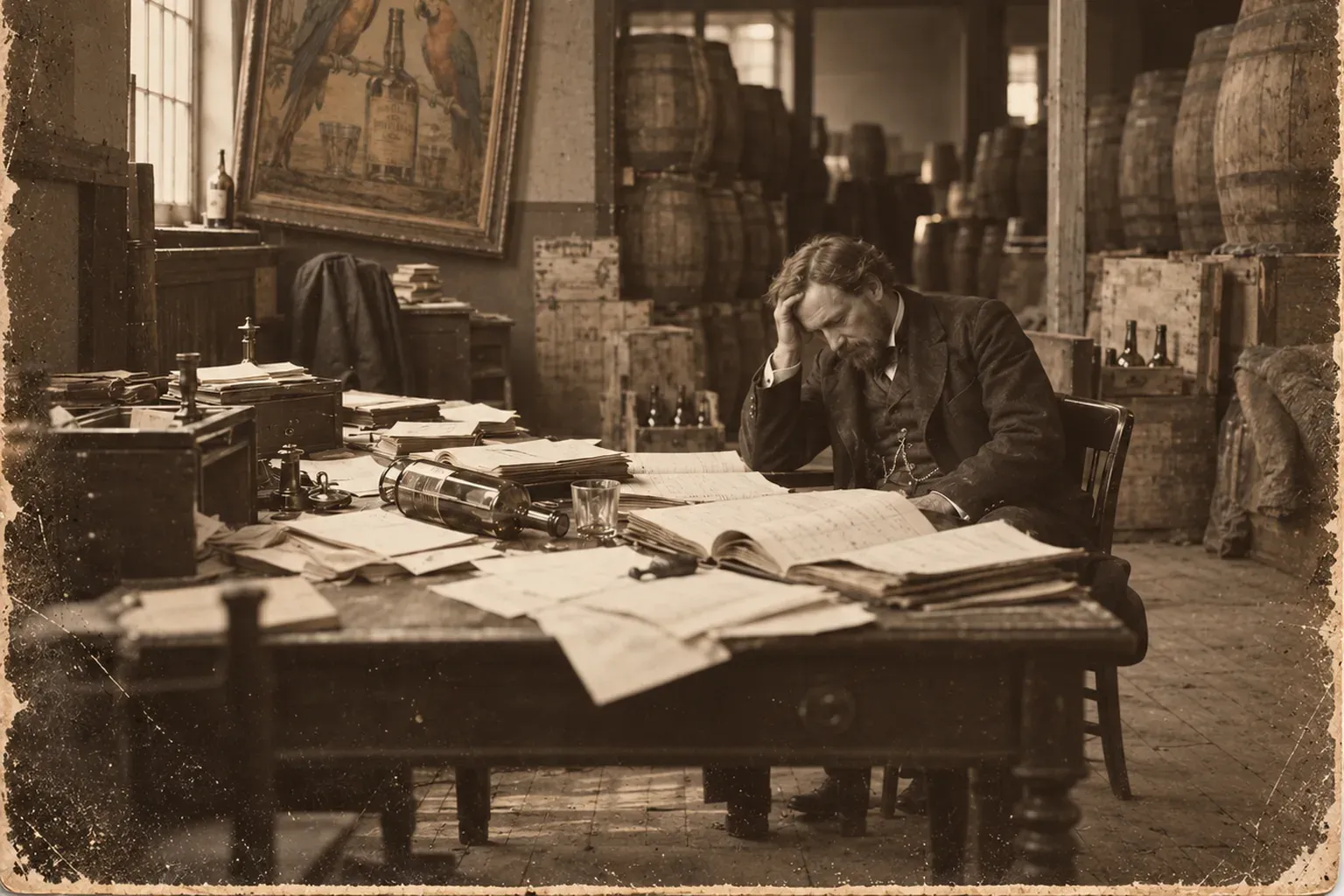
Whisky is made years before it is sold. That gap explains most of the industry’s crises. Producers distil for a market they can only forecast. When demand turns, the spirit is already filling the warehouses. Over roughly a century and a half, this mismatch has combined with financial scandal, war, prohibition and recession to close distilleries in Scotland, Ireland and the United States. This article traces the main episodes and what they left behind, including the lost distilleries whose casks and bottles still circulate today.
Explore Whisky Casks on cask.directory
cask.directory connects buyers directly with producers, brokers and independent bottlers offering whisky, rum, cognac, armagnac, calvados and other mature spirits casks.
Why whisky runs in cycles
Scotch whisky must, by law, mature in oak casks in Scotland for at least three years. Many single malts are sold far older. A distiller deciding today how much new spirit to make is betting on demand a decade or more away.
Two things amplify the risk.
- The weight of blends. A blend is a mix of malt whisky and grain whisky, the latter usually made in column stills. For most of the twentieth century, blends made up the bulk of Scotch sales. Blending houses were the main buyers of malt from many distilleries. When blenders cut their orders, distilleries that depended on them had few other outlets.
- Fixed capacity. Stills, warehouses and staff are expensive to switch on and off. Once capacity exists, there is pressure to use it.
The result is a familiar pattern. Strong demand encourages expansion. Expansion produces stock. If demand weakens before that stock is sold, prices fall, production is cut and distilleries close. Years later, the cutbacks can produce a shortage of aged whisky, and the cycle starts again.
The Pattison crash, 1898–1899
The late Victorian period was a boom for blended Scotch. Demand grew at home and abroad. The vine disease phylloxera, which devastated French vineyards in the second half of the nineteenth century, is often cited as one factor: it cut brandy supplies and opened space for whisky. Many new distilleries were built in the 1890s, notably in Speyside.
Pattisons Ltd, a blending and wholesale firm based in Leith, became one of the most visible players of that boom. It expanded quickly and spent heavily on promotion. Its finances did not match its image. The firm failed at the turn of 1898 and 1899, and the Pattison brothers who ran it were later convicted of fraud.
The collapse hit confidence across the trade. Creditors, including distillers, were left exposed. Buyers held back while stocks remained high. The building wave of the 1890s stopped, and the following decades saw far fewer new distilleries. Several existing ones closed or fell silent. A silent distillery is one that has stopped producing, whether temporarily or for good.
Tax, war and the birth of a minimum age, 1909–1918
The early twentieth century added fiscal and political pressure. Spirit duty rose sharply under the 1909 budget. The First World War then brought restrictions on distilling, as grain was needed for food and industrial alcohol was needed for the war effort.
One wartime measure outlasted the war. Legislation passed in 1915 required spirits to be stored for a minimum period before sale, a rule that was soon extended. It is the origin of the minimum maturation requirement that still underpins the legal definition of Scotch.
Prohibition and the Depression, 1920–1933
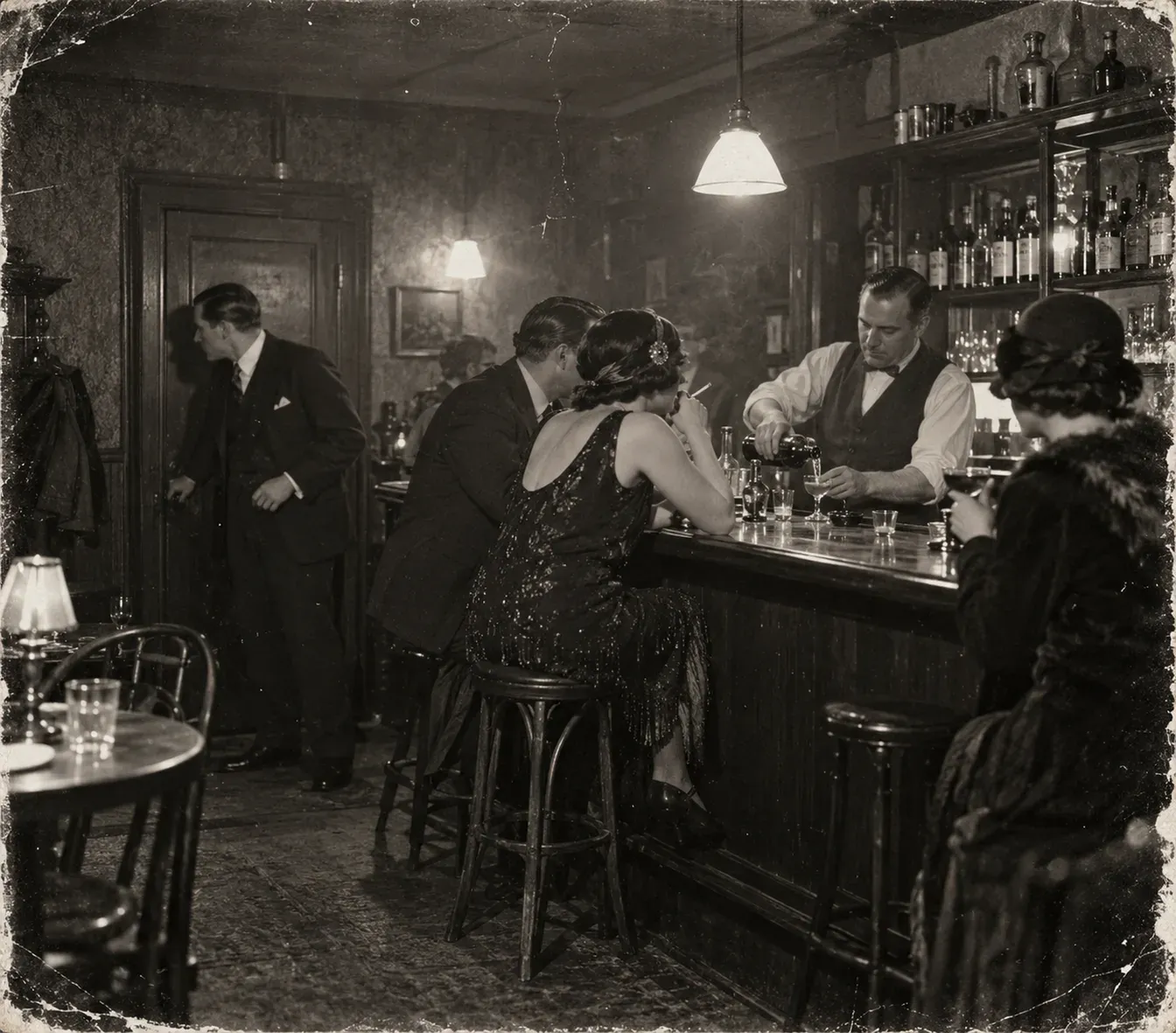
The United States banned the production and sale of alcohol from 1920 to 1933. American distilling largely shut down, with limited exceptions such as whiskey sold for medicinal purposes. For Scottish and Irish exporters, the largest potential export market closed officially, although some whisky reached American drinkers through indirect routes.
Campbeltown
Campbeltown, on the Kintyre peninsula, had been one of the major centres of Scotch production, with around thirty distilleries at its peak. By the 1930s only a handful remained. Historians usually point to several causes together: dependence on blenders, a loss of reputation for quality, the closure of the American market, and the economic slump that followed 1929. The town never regained its former scale.
Ireland
Irish whiskey had been a leading whiskey category in the nineteenth century. It suffered even more. Irish distillers lost the American market to Prohibition. In the 1930s, a trade dispute between the Irish Free State and the United Kingdom closed off British and Commonwealth markets. Irish producers had also been slower than the Scots to embrace blending with column-still grain whisky. By the mid-twentieth century, the Irish industry had shrunk to a small number of distilleries.
Across Scotland, the combination of Prohibition and the Depression left many distilleries silent in the early 1930s.
Try our Ultimate Cask Calculator to Compare Offers and Estimate Bottling Yields
Discover our free Whisky Cask Calculator to compare cask offers, estimate bottling yield, calculate cost per bottle, and make smarter whisky cask investment decisions with confidence.
The Second World War, 1939–1945
The war brought rationing of grain. Distilling was halted or heavily restricted for long periods. After 1945, the British government steered available whisky towards export markets to earn foreign currency, while supply at home stayed tight.
The lost production years had a delayed effect. Because whisky must mature, the gap in distillation translated into a scarcity of aged stock in the post-war years.
The long expansion, 1950s–1970s
The decades after the war were broadly a period of growth for Scotch, driven by exports. Producers responded by rebuilding and enlarging. Distilleries added stills, silent sites were reopened, new malt distilleries were built and large grain distilleries increased output.
Ireland went the other way. In 1966, the remaining major Irish producers merged to form Irish Distillers. Production was later concentrated at a new distillery at Midleton, County Cork, which opened in the mid-1970s, and older sites closed.
The Scottish expansion rested on the assumption that demand would keep rising. In the 1970s, that assumption met the oil shocks, high inflation and recession in key markets. Consumer tastes in some major markets were also shifting towards lighter, white spirits such as vodka. American whiskey faced a similar downturn at home. Meanwhile, Scotch distilleries kept filling casks on the basis of earlier forecasts.
The whisky loch and the 1983 closures
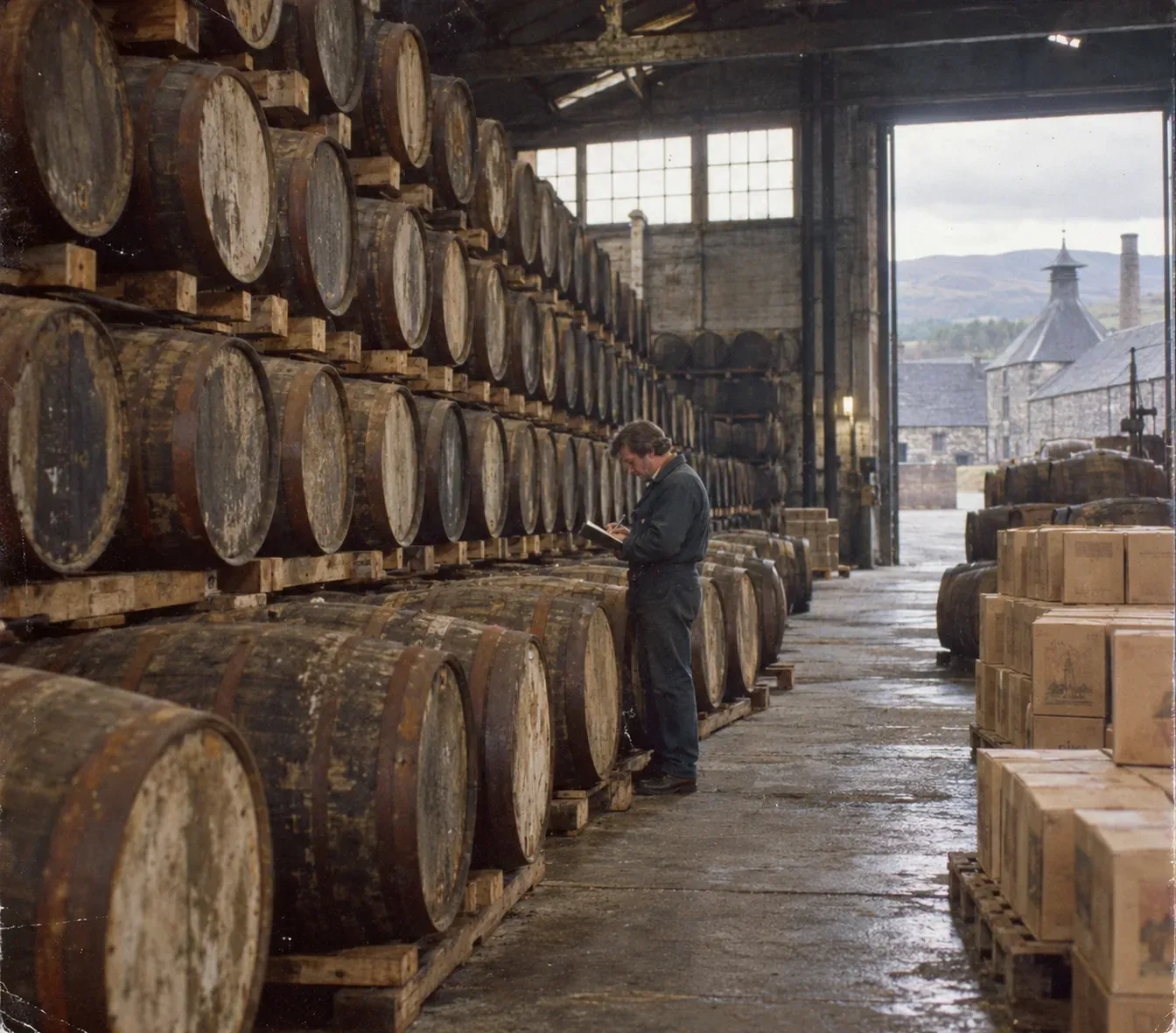
By the early 1980s, the industry was holding far more maturing whisky than it could sell. The surplus became known as the whisky loch, a play on the butter mountain and wine lake of European agricultural surpluses.
The response was severe. The Distillers Company Limited (DCL), then the dominant Scotch group, closed a large number of its malt distilleries in 1983, followed by another wave in 1985. Other owners also closed or mothballed sites. A mothballed distillery is shut but kept with its equipment, so that it can in principle restart.
Names often associated with the 1983 closures include Brora, Port Ellen, St Magdalene, Glenlochy, Glen Albyn, Glen Mhor and North Port. Some of these sites were later demolished or converted to other uses. Others kept part of their buildings.
The crisis also reshaped ownership. In 1986, Guinness took over DCL after a contested bid that was followed by a well-known share-dealing scandal. The DCL distilleries later became part of Diageo, formed in 1997.
What the crises left behind
Lost distilleries and finite stock
When a distillery closes for good, no new spirit is made. The casks already filled become a finite stock, consumed as they are bottled. This is why whiskies from distilleries closed in the 1980s attract collector interest. Their supply can only shrink.
Some closed distilleries have since been revived. Brora and Port Ellen have both been rebuilt and restarted by their owner, and other silent names have returned under new owners. A revived distillery produces new spirit, which matures from scratch. Its stocks from before the closure remain a separate, older category.
Consolidation
Each crisis accelerated concentration. Firms that survived often absorbed those that did not. Much of today’s Scotch capacity sits with a small number of large groups, alongside independent producers.
Rules that stayed
Some measures born of crisis became permanent. The minimum maturation period introduced during the First World War is the clearest example.
Reading today’s market through this history
The underlying mechanism has not changed. Whisky distilled today will be sold years from now, in conditions nobody can know in advance. Recent decades have seen new distilleries open and existing ones expand, in Scotland, in Ireland and elsewhere.
History does not say when the next turn will come, or whether it will come at all. It does suggest questions a buyer or seller of casks can usefully ask:
- Is the distillery producing, mothballed or closed?
- Who buys most of its output: its own brands, blenders, or the bulk market?
- How is the cask held, and under whose name, in which bonded warehouse?
- How much comparable stock is likely to be maturing elsewhere?
None of these questions predicts a price. They help place a cask within the cycle the industry has lived through for more than a century.